What does the lowest to highest rank challenge in Valorant reveal about climbing solo?
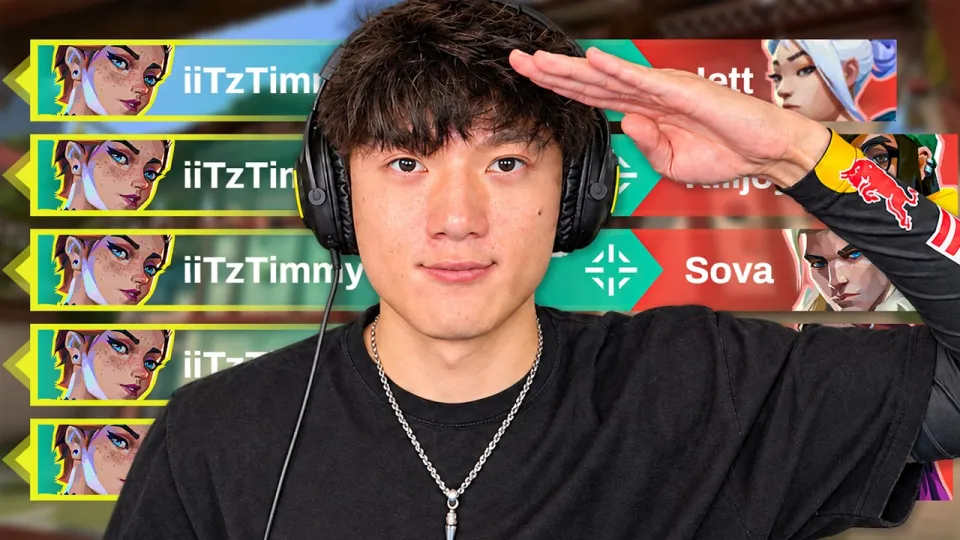
Video: I Might Be Getting TOO Good at Valorant… (Lowest To Highest Rank Challenge)
You can order the same kind of articles for your own video to boost it on YouTube and Google. Just message the Telegram bot @sat_sit_bot. Articles with your video embedded are written and posted by the bot itself — on popular topical sites (no ads). Your first 50 articles are free.
Key takeaways
- The challenge: start from Iron and climb to Radiant in Valorant solo queue.
- iiTzTimmy's run highlights how quickly a top player exploits low elo mistakes.
- Common low elo issues: bad comms, blaming teammates, poor map awareness.
- Cypher players in the first game tilted hard and made up comms, per viewer comments.
- The second lobby was desperate to prove themselves against a known streamer.
The lowest to highest rank challenge in Valorant is a solo queue climb from Iron to Radiant, and it reveals that raw aim and game sense can carry a player through low elo faster than any team-based strategy. In iiTzTimmy's run, the contrast between his decision-making and that of his low-rank teammates shows exactly why most players get stuck in Silver and Gold. You can watch the full stream live on Twitch to see how he handles each rank.
What is the lowest to highest rank challenge in Valorant?
The lowest to highest rank challenge is a self-imposed grind where a high-ranked player starts on a fresh Iron account and tries to reach Radiant before the season ends. In Valorant, ranks run from Iron to Radiant, and the matchmaking system adjusts your MMR quickly if you win consistently. iiTzTimmy's version of the challenge focuses on solo queue, meaning he cannot rely on a premade team to carry him. The goal is to demonstrate how a professional-level player adapts to unpredictable teammates and opponents at each tier. The video from iiTzTimmy Two shows the early stages of this climb, where the skill gap is most obvious and the entertainment value comes from watching low elo chaos unfold.
Why do low elo players get stuck according to the challenge?
Low elo players get stuck because they focus on blaming teammates instead of fixing their own mistakes, a pattern that becomes glaring when a Radiant-level player joins the lobby. In the first game of iiTzTimmy's challenge, a Cypher player repeatedly criticized his team, invented callouts that were never made, and refused to adapt. Viewer comments pointed out that this Cypher was "coping so hard" and should take a break if he was getting that tilted about missing comms. The challenge highlights three common traps:
- Over-reliance on comms – Low elo players often demand perfect communication but fail to use their own minimap or sound cues.
- Ego peeking – Players take fights they cannot win and then blame the team for not trading.
- Ignoring economy – Saving and buying together is rare in Iron and Bronze, which snowballs into lost rounds.
iiTzTimmy's approach is the opposite: he takes calculated duels, uses utility to isolate fights, and keeps his mental stable even when teammates make questionable plays. That mental stability is a bigger factor than aim in low elo.
How does a top player exploit low rank lobbies?
A top player exploits low rank lobbies by punishing predictable rotations, winning aim duels with superior crosshair placement, and controlling tempo. In the challenge, iiTzTimmy often finds himself first on site because enemies do not expect aggressive pushes and teammates are slow to follow. One viewer noted the irony of him asking "Am I also going to be first one on site?" and then immediately confirming it after failing to get up a ledge. The key advantages a Radiant player has in Iron and Bronze are:
- Faster reaction time – Professional players consistently win the first shot in a duel.
- Better utility usage – Smokes and flashes are placed to create one-on-one fights rather than random cover.
- Map awareness – They track enemy rotations through sound and game sense, not just comms.
- Mental resilience – They do not tilt after a lost round or a teammate's mistake.
These advantages mean that a player like iiTzTimmy can maintain a high win rate even with uncooperative teammates, which is why the challenge progresses quickly through the lower ranks.
What do viewer reactions say about the challenge?
Viewer reactions to the challenge focus on the stark difference between low elo and high elo mentalities, with many commenting on specific players and moments. One popular comment praised a Reyna for being "the sensible one" in a chaotic lobby, while another pointed out that the Cypher from the first game was the "epitome of a bad mental" because he nitpicked everything and made up comms. Other viewers noticed a bug where iiTzTimmy's ultimate did not activate after a kill, and some asked about his sensitivity and DPI settings. The comments also highlighted how desperate players in the second game were to prove themselves against a known streamer, leading to overly aggressive plays. These reactions show that the challenge is not just about climbing ranks but also about exposing the psychology of solo queue.
How can you apply the challenge lessons to your own ranked climb?
You can apply the challenge lessons by focusing on your own decisions, keeping comms simple and useful, and avoiding tilt after mistakes. Here are practical steps based on what iiTzTimmy demonstrates:
- Review your deaths – Ask whether you could have avoided the fight instead of blaming a teammate.
- Use your mic for useful info only – Call out enemy positions and utility, not complaints.
- Play for trades – If a teammate pushes, follow up so the fight becomes a trade instead of a solo death.
- Stick to a small agent pool – Master two or three agents rather than filling every role.
- Take breaks after two losses – Tilting leads to worse decisions, as seen with the Cypher in the first game.
These steps do not require Radiant aim; they require consistency and self-awareness. The challenge shows that low elo players often have the mechanics to climb but lack the discipline to make better choices.
Useful links
- Watch iiTzTimmy live on Twitch: https://www.twitch.tv/iiTzTimmy
- Follow on Twitter: https://twitter.com/iiTzTimmy
- Instagram: https://www.instagram.com/iiTzTimmy/
- TikTok: https://www.tiktok.com/@iiTzTimmy
- Join the Discord community: https://discord.gg/iitztimmy
Final thoughts
The lowest to highest rank challenge is more than a stunt; it is a case study in how decision-making and mental fortitude separate ranks in Valorant. iiTzTimmy's run shows that low elo players can climb by fixing their own habits rather than demanding perfection from teammates. The video from iiTzTimmy Two captures the chaos and the lessons, making it a useful watch for anyone stuck in Silver or Gold. For more live gameplay and challenge runs, tune into iiTzTimmy's Twitch channel.
Questions & answers
What is the lowest to highest rank challenge in Valorant?
It is a solo queue climb where a high-ranked player starts from Iron and attempts to reach Radiant. The challenge tests individual skill and mental resilience across all ranks, as shown in iiTzTimmy's run.
Why do low elo players blame teammates so often?
Low elo players often blame teammates because they lack self-awareness and focus on external factors instead of their own mistakes. The challenge highlights that this mindset prevents improvement and creates a toxic environment.
How long does it take to climb from Iron to Radiant?
The time varies based on win rate and MMR, but a top player can climb quickly by winning most matches. iiTzTimmy's challenge shows that consistent high performance accelerates rank progression significantly.
What sensitivity does iiTzTimmy use in Valorant?
iiTzTimmy has not publicly shared his exact sensitivity in the video, but viewers often ask about it. You can find his settings on his Twitch channel or through community resources.
Source: I Might Be Getting TOO Good at Valorant… (Lowest To Highest Rank Challenge) · Markdown version